

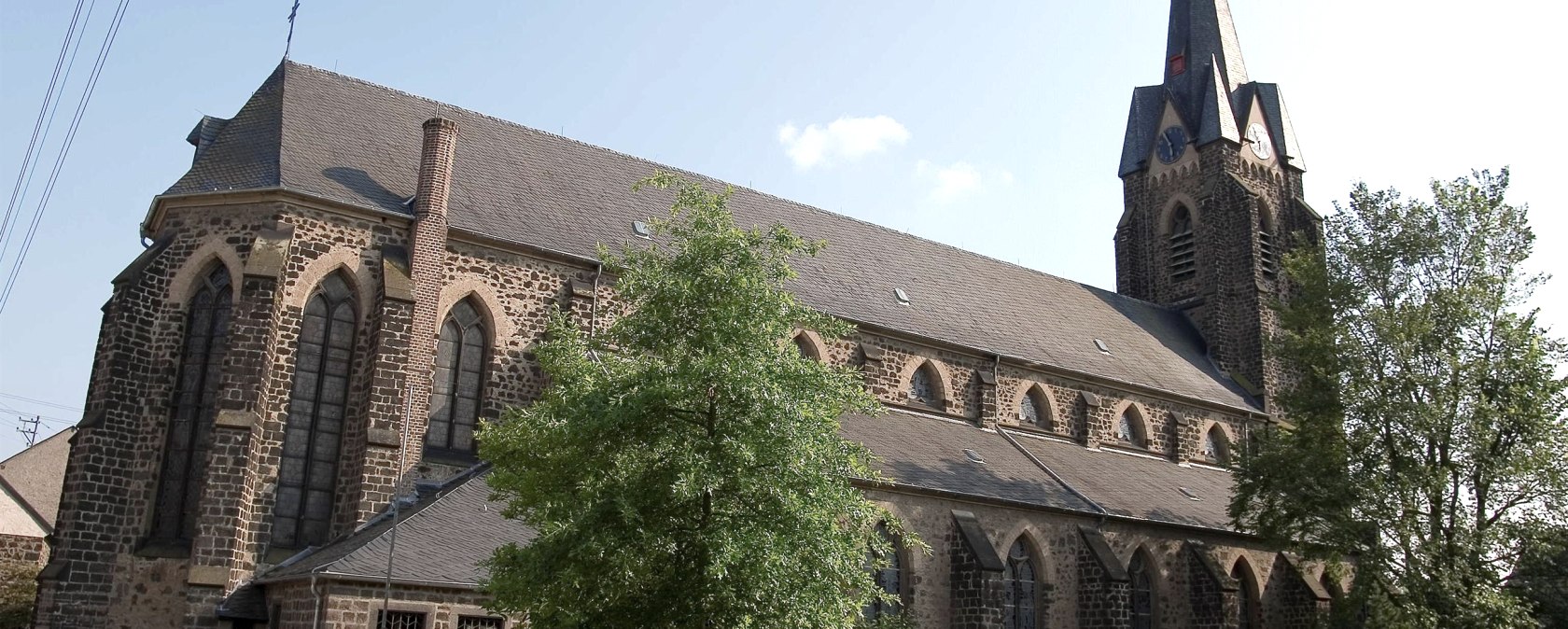
St. Willibrord Aussenansicht, © VG Pellenz/Manea

St. Willibrord

Plaidt

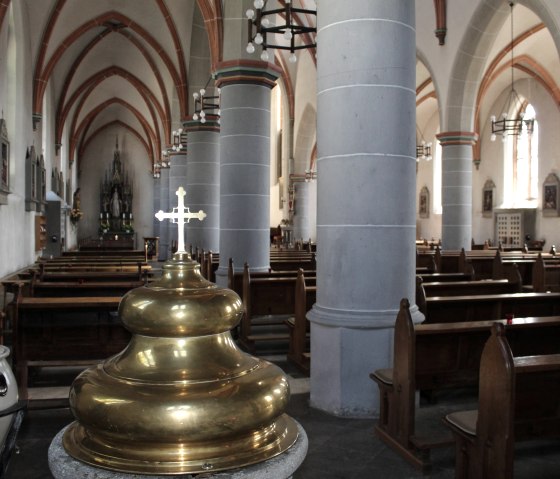
The three-aisled neo-Gothic church was planned by the famous architect Vincenz Statz from Cologne (construction period 1859 - 1861).
Until 1861, the Plaidter Church stood on the “Old Church Square”, which had become dilapidated and offered too little space for the steadily growing population.
In 1846, Count Clemens von Boos-Waldeck from Sayn donated relics of St. Willibrord to the church, which his grandfather received from the Echternach monastery in 1786.
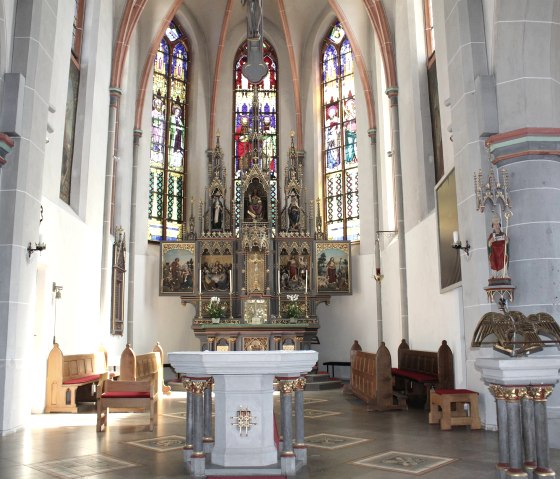
As part of the major renovation from 1973 to 1975, the interior was given its current design by the architect Karl Peter Böhr.

Further information: https://www.pfarierendengemeinschaft-plaidt.de/unsere-pfarrei/st-willibrord-plaidt/geschichte/
mehr lesen

Share content:

At a glance

Opening hours

  • From January 1st to December 31st
    Monday
    9:00 AM - 5:00 PM

    Tuesday
    9:00 AM - 5:00 PM

    Wednesday
    9:00 AM - 5:00 PM

    Thursday
    9:00 AM - 5:00 PM

    Friday
    9:00 AM - 5:00 PM

    Saturday
    9:00 AM - 5:00 PM

    Sunday
    9:00 AM - 5:00 PM

daily from approximately 09:00 AM – 05:00 PM

Place

Plaidt

Contact

St. Willibrord
Mühlenstraße
56637 Plaidt

Bitte akzeptieren Sie den Einsatz aller Cookies, um den Inhalt dieser Seite sehen zu können.

Alle Cookies Freigeben

Plan your journey

per Google Maps

You might also be interested in

Vulkanausbruch im Lava-Dome, © Eifel Tourismus GmbH, D. Ketz

Lava-Dome - Deutsches Vulkanmuseum

The Lava Dome is a very special museum in the Volcano Park in the East Eifel. On 700 square metres it is not "museum-like", but spectacular - for children and adults, for absolute newcomers and for those who are pre-informed about volcanism. In the "Land of Volcanoes", a multimedia show tells the story of two violent volcanic eruptions. Images, sounds and projections let you relive them - up close and intense, but fortunately virtual. The "volcano workshop" is a genuine small science centre. At experimental stations, visitors gain a vivid impression of the processes inside the earth. The "Time of the Volcanoes" lets stones speak: Anyone who touches them can hear and see the great eruptions of times gone by. Current seismological data and images from webcams around the world are particularly exciting. And in the round cinema, a fictitious news programme takes your breath away, because here it becomes clear what another eruption of the Laacher See volcano would mean.